|
By Bob Norson
We had waited for the strong wind warning
to abate before working our next leg north. The S.E. had gone
from 35 knots for several days, to near nothing. The way the
season had been going there was no future in waiting around for
good conditions; we would never make it north.
We reconciled ourselves to a 60 mile motor to Keppel Island.
The howling trades were gone, but the huge swell they had generated
was still around. It was a roller coaster ride all day, with
the swell on our stern quarter. About ¾ of the way there,
the motor started doing strange things. The RPM was rising and
falling in a rhythm similar to the swell.
Our old Perkins 4236 is a very reliable thing, and we were particularly
depending on it that day. It got us to Keppel…just!
The anchorage was rolling heavily, but work had to be done. The
glass bowl on our Racor filter showed some debris, but not horrid.
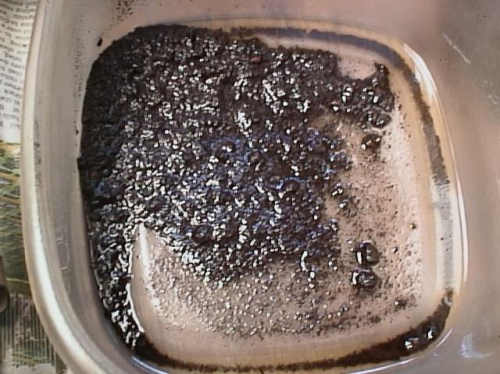
Opening the top however, was impressive. The filter element was
buried under a thick brownish goo. I don't know how it ran at
all!
With the housing cleaned out, a new filter element installed
in the Racor, and the Lucas filter downstream, we were in business
again after bleeding the lines.
Sound familiar? Ours was a typical situation. Our tanks were
full of “THE BUG”. The rough sea conditions stirred
the mess up, and soon we were in trouble.
Our vessel has everything going against it for keeping diesel
clean. She carries 2000 litres in two steel tanks. Needless to
say, our fuel sits for a long time before use. In spite of all,
we seem to be winning. It has taken some research and work, but
if ours can be cleaned up, anyone's can!
“THE LABORATORY”
Over several years we had usually used a common fuel treatment
that was easy to get. In spite of it, our fuel was getting darker,
and I was changing filters more and more often. It was time for
drastic action!
Since most of the fuel we use is (Brand Z), I gave their distributor
a ring. They organised contact with their laboratory. The lab
sent up a couple suitable shipping containers and I sent them
back with samples of our ugly fuel.
A week or so later, I got a call from the laboratory. Our fuel
was alive with “the bug”, and heavily oxidized. Overall,
not good. He asked what treatment we used. When I told him the
brand most often used, I could hear the groan. With special emphasis
he said, “We do not recommend that type of treatment.”
He went on to explain that that treatment was an emulsifier.
It caused the moisture in the fuel to become “suspended”,
which he explained, is the ideal environment for the bug. He
preferred a treatment that allowed the moisture to separate,
and that contained a strong biocide. “Fuel
Treat” was one of the brands he thought was effective.
“So which one is best,” I asked? “I’m not
really supposed to say but... Fuel Treat is what I would use,”
he offered conspiratorially.
The technician was very patient as I interrogated him to learn
all I could to cope with the diesel fuel storage problems. Here
is some of what I worked out:
FUEL INSPECTION
(find “THE BUG” and kill him)
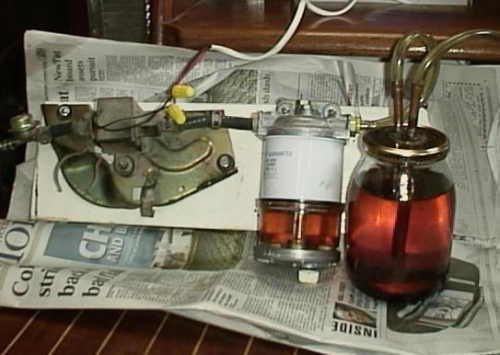
If your filters have a glass bowl, check the appearance of the
fuel. Ignore the colour for now. Look at the clarity. If it's
difficult to get a good look in your engine room, dip out, or
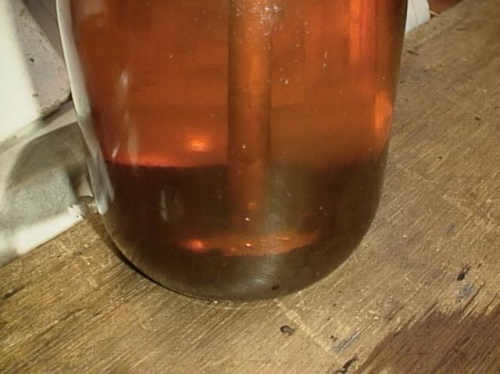
pump out some fuel from your tank into a glass jar. Get it from
the bottom of the tank if you can. Simply compare that with some
fresh fuel in a similar glass container.
If the clarity is similar, you probably don't have “the
bug”. If your tank sample has a cloudy look to it (even
slight), you probably have “the bug”.
Compare colour and odour. Different suppliers may have a little
different colour, but if there is a great difference along with
a “stale fuel” odour that the fresh sample doesn't
have, you may have oxidation of the fuel.
If you have tanks in perfect condition, use your fuel regularly,
keep the tanks topped off, and are lucky as hell, you might be
OK. For the rest of us, a good treatment like FUEL
TREAT BC250 is the go.
Follow instructions carefully. Just pouring a dose in the tank
doesn't work as well. I mix a dose with a half full 25 litre
drum of diesel and shake like buggery. Then pour it in just before
topping off.
“I'VE MADE SURE IT'S DEAD…
NOW WHAT?”
Now that you've cycled through some good biocide and your fuel
is nice and clear, your clogged filter problems are over…right?
Not necessarily!
The dead remains of the bug, and all the other crud that's contributed
to your tank pollution is still there. The goo is just waiting
for you to cross a bar in bad weather, or some such thing to
punish you for your optimism.
|