Just because it's FREE doesn't mean it should be wasted! 

 Back to Home Page

 Back to Issues Page

 
Below are links to web sites that I believe are important information concerning water use and waste water issues in Queensland Coal mining areas. Please note that I do not consider mining company or Queensland Government web sites necessarily reliable on these subjects. At least one that I found I know to be farcical. Some mining companies would very much like to convince the public that they have a quick, easy and cheap fix but according to research from the US and New Zealand it isn't possible.
 
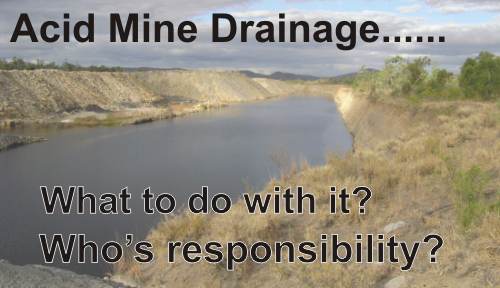
 Click on the photo below to see how mining waste water can effect a community. An article by Bob Norson
 

 Click here to see how the US government had to go about rehabilitating one creek in West Virginia
 Click here to see how the state of Pennsylvania instructs to use organic compost as treatment

 Click here to see how a community in The Us struggles to fix a stream

 What are the costs? A private company specialising in treatment

 What Wikipedia has to say
See what the researcher quoted below has to say about water& coal mines

 Below is a quote from a coal company research document;

"Access to a reliable source of water is an essential requirement for coal mines. Even those mines that do not wash their product through a preparation plant need significant quantities for dust management, drilling, human consumption and numerous other uses. Current corporate reports provide statistics showing that approximately 200L of fresh water can be consumed for every tonne of coal produced, although that can vary both upwards and downwards according to operating practice and circumstances. The transformation of this fresh water to dirty water which must then be managed through the mines systems and storages generates additional challenges. In Central Queensland the combination of extended drought conditions, continued new coal developments, a beleaguered agricultural sector and a new regulatory regime for managing water has placed the issue at the top of the public agenda. Water availability is now a limiting factor on development in the region."